

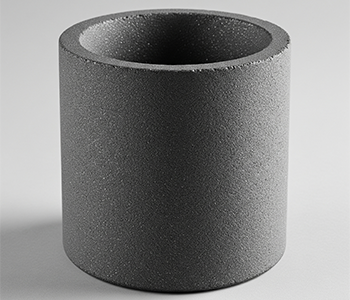
Clay Graphite Crucibles
A clay graphite crucible is a type of melting pot made from a mixture of refractory clay and graphite. This combination leverages the key properties of both materials: the high thermal stability and conductivity of graphite, and the binding and refractory properties of the clay. Other additives, such as grog or silicon carbide, are often included to enhance specific characteristics.
Clay graphite crucibles are a popular choice in industrial and laboratory settings for their balance of performance and cost-effectiveness.
Key Properties and Composition
The typical composition of a clay graphite crucible includes:
- Graphite: Generally accounts for 50-70% of the mixture. This provides the primary benefits of high thermal conductivity, which ensures rapid and uniform heating, and good resistance to thermal shock (sudden temperature changes).
- Refractory Clay: Makes up 30-50% of the material. The clay acts as a binder, holding the graphite particles together and providing structural integrity. It also contributes to the crucible’s refractoriness, or its ability to withstand high temperatures without deforming.
- Other Additives: Materials like silicon carbide or grog (pre-fired clay) are often added. Silicon carbide, for instance, can increase durability, oxidation resistance, and performance in specific furnace types.
These crucibles typically have a matte gray appearance, which distinguishes them from the glossy black finish of high-purity graphite crucibles.
Advantages and Disadvantages
Advantages:
- Cost-Effective: They are generally more affordable than pure graphite or silicon carbide crucibles, making them a practical choice for general-purpose applications.
- Good Thermal Shock Resistance: The graphite content helps the crucible withstand rapid heating and cooling cycles without cracking.
- Versatility: They are suitable for use in a wide range of furnace systems, including fuel-fired, electric resistance, and induction furnaces.
- Chemical Resistance: They show good resistance to chemical corrosion from most molten metals and fluxes.