

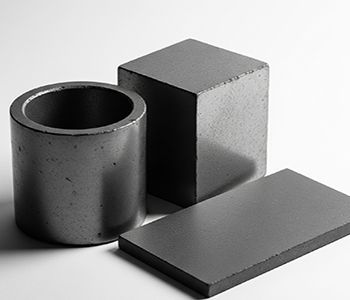
Graphite Carbon Crucible
“Graphite carbon crucible” is a term that refers to a crucible made from a form of carbon known as graphite. Essentially, “graphite crucible” and “graphite carbon crucible” are often used interchangeably to describe the same product.
Graphite is a crystalline form of carbon, and its unique properties make it an ideal material for crucibles used in high-temperature applications. It’s important to note that while all graphite is carbon, not all carbon is graphite. The term “graphite carbon” is used to emphasize that the crucible is made from this specific, highly-structured form of carbon.
Key Properties
The key properties of graphite carbon crucibles are the same as those of graphite crucibles, and they stem directly from the structure of graphite itself:
- High Thermal Conductivity: Graphite is an excellent conductor of heat. This property allows for rapid and uniform heating of the materials inside the crucible, which is critical for efficient melting and casting processes.
- High Thermal Stability and Resistance: Graphite has an extremely high melting point (over 3,650°C), allowing it to be used in furnaces and applications that reach very high temperatures. It also has good resistance to thermal shock, meaning it can withstand rapid changes in temperature without cracking.
- Chemical Inertness: Graphite is highly resistant to reaction with most molten metals, acids, and other chemicals. This inertness is crucial for preventing contamination and maintaining the purity of the molten material.
- Electrical Conductivity: As a good conductor of electricity, graphite is a prime material for crucibles used in electric resistance or induction heating furnaces.
- Low Wettability: Molten metals do not easily stick to the surface of a graphite crucible. This “non-wetting” property makes pouring cleaner and easier and also helps reduce material loss.